
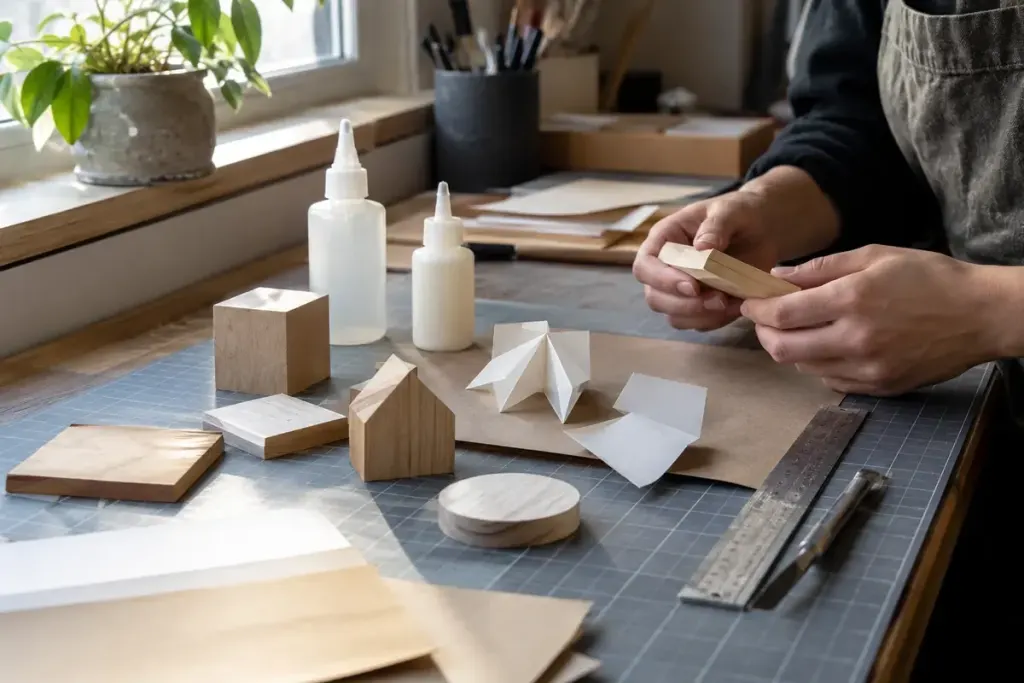
A strong glue is not automatically the right glue. A rigid bond can fail on a flexible surface, a wet adhesive can wrinkle paper, and a clear-looking product can leave a visible edge. Start by naming both materials and what the finished joint needs to do.
Describe the job before the bottle
Are you attaching paper to card, fabric to wood, or a small ornament to a painted surface? Will the piece hang vertically, bend in use or sit in sunlight? Does the joint need to disappear, and can the materials tolerate moisture or heat?
Read the product label for compatible materials, surface preparation, ventilation, handling and curing. “All purpose” is not a promise about every coating or finish. Follow the manufacturer’s limitations, particularly around skin contact, children and food-contact objects. Decorative craft materials should not be assumed suitable for repairing functional household equipment.
Make a joint you can afford to lose
Use scraps of the same materials, including the same paint or finish. Apply the specified amount and hold the pieces as directed. Too much adhesive can create squeeze-out without improving the joint. Protect the work surface, and use clamps or weights only where the material can tolerate them.
Write the application time on a separate note. Initial grab and full cure are different stages; testing a joint while it is still curing tells you little about its final performance. Leave it undisturbed for the stated period.
Inspect appearance as well as strength
Once cured, look for staining, warped paper, a visible ridge or a softened finish. Gently test the sample in the way the finished object will be used, without turning a decorative test into a claim about structural safety. If the surface peels away with the adhesive, the weakness may be in that surface rather than the glue.
Keep the successful scrap with the project notes. Record product, materials and any preparation used. The next time you reach for the same bottle, you will know which particular problem it solved, rather than remembering only that it felt strong.