
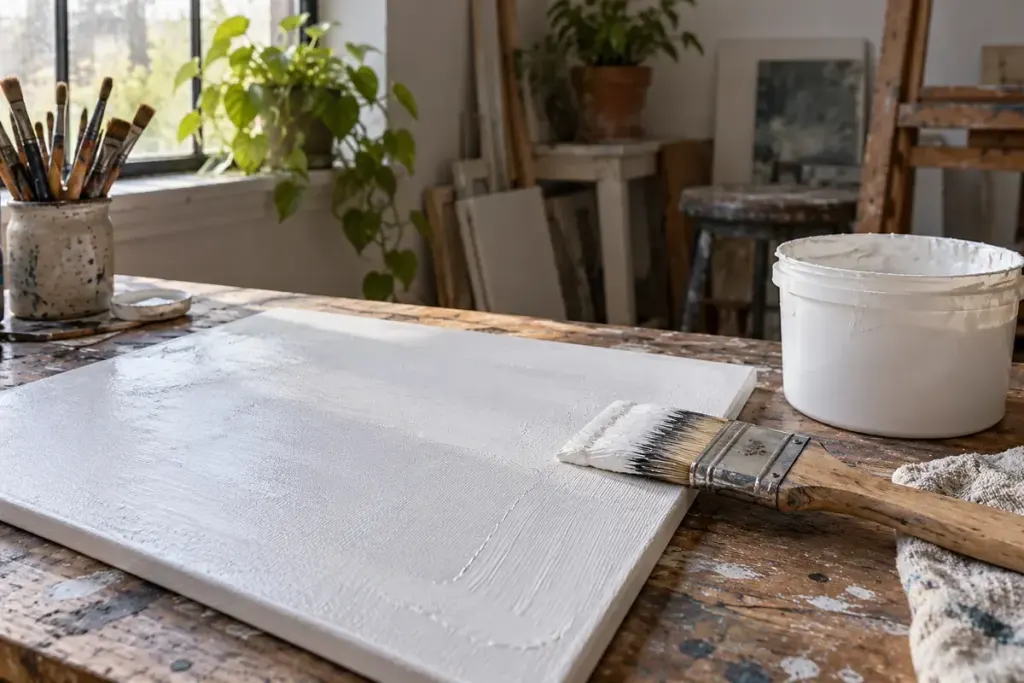
A blank panel and a pot of white paint can seem like everything needed for a pale starting surface. Before opening the paint, check whether the panel needs a ground. Surface preparation and the colour you paint on top are separate decisions.
Liquitex describes its acrylic gesso as a surface preparation product. Use the instructions for the particular ground and painting medium you own: the word gesso does not make every product suitable for every support or technique.
Start with the support
Is the surface raw wood, paper, a bought canvas or a panel already prepared by its manufacturer? Read the supplier’s description. Adding another layer without checking can create work you did not need, while painting directly on an unsuitable raw surface can create problems you did not anticipate.
Make a small test piece from the same material when possible. Label its back with the product, preparation and date. This is especially helpful if you are comparing a smooth ground with one that retains more brush texture.
Keep the first coat manageable
Follow the maker’s directions on mixing, application, drying and any additional coats. Work with suitable ventilation and keep food utensils separate from art materials. Do not invent a thinning ratio because a thick product is inconvenient.
After the stated drying period, examine the surface in side light. Brush ridges that look minor under direct light may affect fine line work. If the instructions permit sanding, follow the relevant dust precautions and test gently on the spare piece first.
Apply a little of your intended paint to the test ground. Notice how the brush moves, whether coverage is even and whether the surface suits the mark you want. A ground that works beautifully for textured painting may not be your preference for a very smooth miniature.
The useful comparison is between complete prepared surfaces, not just two white liquids in their containers. Keep the successful sample so the next project begins with an observation you can repeat.