
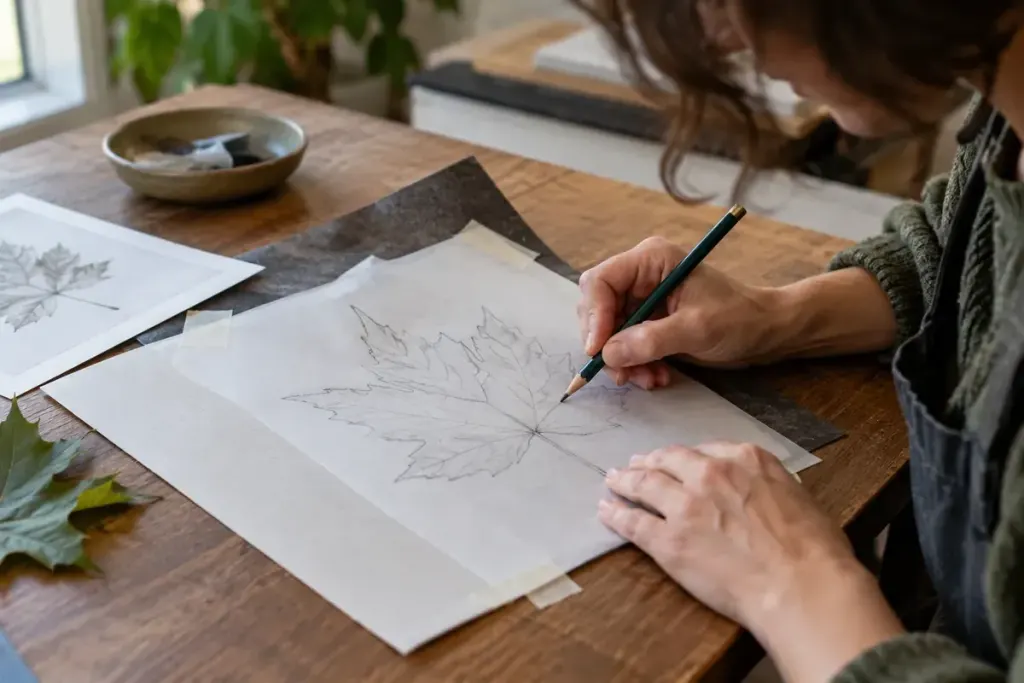
A graphite transfer can move a sketch onto another surface without redrawing every proportion. The difficulty is often alignment: lift the sheet too soon, discover a missing line and it becomes hard to put the drawing back in exactly the same place.
Begin with a small test on an offcut of the intended surface. Graphite can leave marks that are awkward to remove from textured paper or a pale painted finish, so check both transfer strength and cleanup before committing to the final piece.
Make a hinge instead of a loose stack
Position the drawing and secure one edge with suitable low-tack tape. Test the tape first, especially on delicate paper. The attached edge acts as a hinge: you can inspect underneath while keeping the original registration.
Place graphite transfer paper beneath the drawing with the marking side toward the receiving surface. Alternatively, prepare the back of an expendable drawing with an even graphite layer. Keep the working area clean so loose material does not smudge unrelated areas.
Trace only what the next stage needs
Use controlled pressure and work through the main outlines. A transfer is a guide, not necessarily a finished drawing. Marking every tiny detail can leave an unnecessarily dark web beneath paint or later pencil work.
Lift a corner while the taped edge remains attached. Check a few lines in different areas. If they are faint, adjust pressure on the test area rather than pressing harder everywhere immediately. Excessive pressure can indent soft paper.
Before removing the hinge, inspect the entire outline and add any missing essential marks. Then take away the sheets and soften unwanted graphite with a method appropriate to the surface. Keep the original sketch nearby for reference. A few minutes spent preserving registration can save much more time than trying to reconstruct a shifted contour after the transfer paper has been thrown aside.