
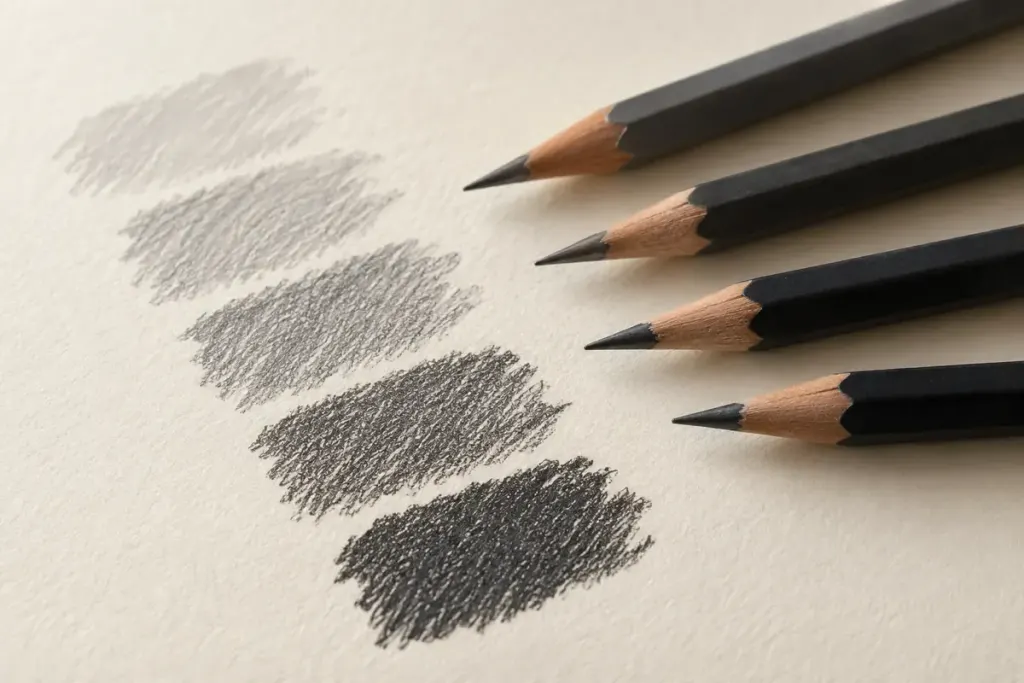
A darker pencil is not simply a light pencil with more effort applied. Graphite grades change how readily the core leaves material on the page, which affects fine lines, broad shading and the pressure needed for a mark.
Derwent’s product guidance explains the H and B grading terms. Treat the markings as a useful starting point within a pencil range, then test the actual pencil on the paper you will use.
Make three kinds of mark
Choose an H, HB and B pencil if you have them. Sharpen each to a comparable point. For every pencil, draw a thin line, shade a small rectangle with the side of the point and make a gradual transition from light to darker pressure.
Keep the paper and hand position consistent. If one swatch uses smooth paper and another uses a textured sketchbook, the comparison is partly about the surface rather than the pencil.
Look beyond darkness. Which pencil keeps a narrow line? Which fills the paper texture readily? Does repeated pressure produce an unwanted shine or a groove? Those observations connect the grade to an actual drawing decision.
Build tone without digging a trench
If a light pencil is not reaching the required dark value, try a softer grade on a spare patch before pressing harder on the drawing. A deep indentation can remain visible even after the graphite is erased.
Use a clean scrap under the resting hand where appropriate, and keep the swatch page. It becomes a small reference for that particular combination of pencils and paper.
There is no obligation to use every grade in a set. A limited selection you understand is more useful than a row of labels whose marks you have never compared. Let the intended texture and edge quality decide the next pencil.