
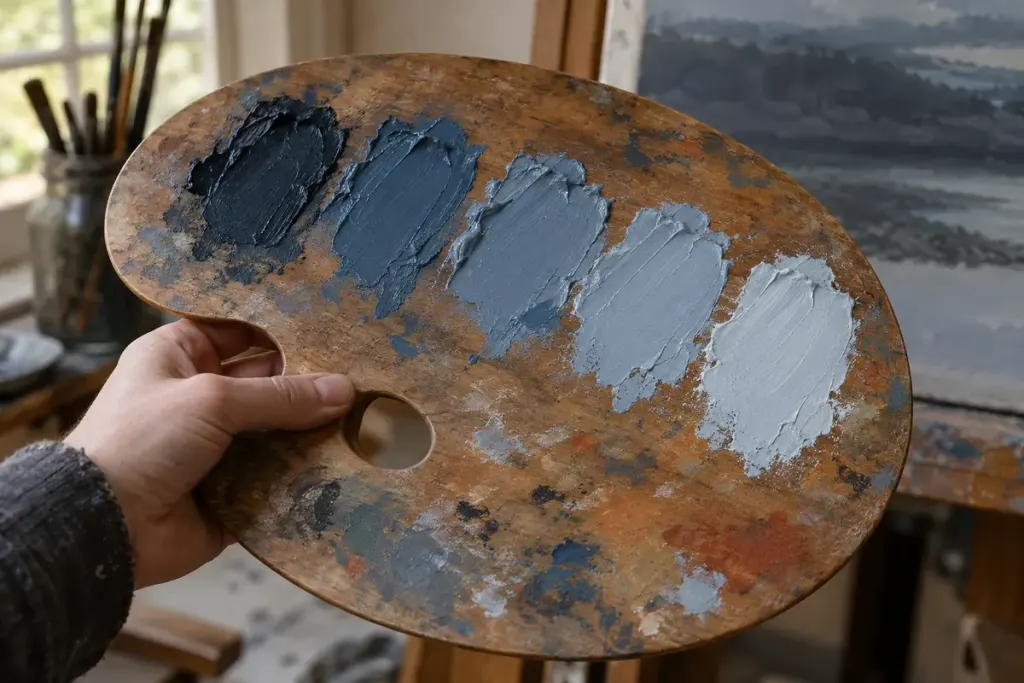
A shadow often needs several related mixtures rather than one tube labelled with the right colour. Mixing a short colour string gives you a set of steps to compare before the brush reaches the painting. This is a studio exercise, not a rule that every subject needs five identical bands of value.
Keep the first experiment narrow
Choose one small subject, such as a blue cup in steady window light. Put a small amount of your starting mixture on the palette. Make several separate piles that move from a darker version towards lighter versions. Keep enough of the original mixture to return to it if one step becomes too pale.
Try the mixtures beside each other on a spare surface suitable for your paint. Ask whether adjacent steps are distinguishable and whether the string still belongs to the same family. White can alter saturation and temperature as well as lighten a mixture, so do not judge only by the amount you added.
Keep the light on the subject consistent while comparing. A passing cloud can change the appearance you are trying to match. If the arrangement changes substantially, pause rather than correcting the paint to follow every moment.
Use the string as a starting palette
Place the larger light and shadow areas first, then mix between your prepared steps where necessary. The object may contain reflected colour that falls outside the string. Keep observing rather than forcing every patch into one of the piles.
After the study, note the starting pigments, surface and lighting. With acrylics, compare again after drying; with oils, keep the test where you can revisit it safely. Follow the product’s handling and ventilation instructions.
A useful record might say “the middle two mixtures were too similar” rather than “the blue was wrong.” That tells you what to adjust next time. The exercise succeeds when it makes the relationships easier to see, even if the finished study is small and imperfect.