
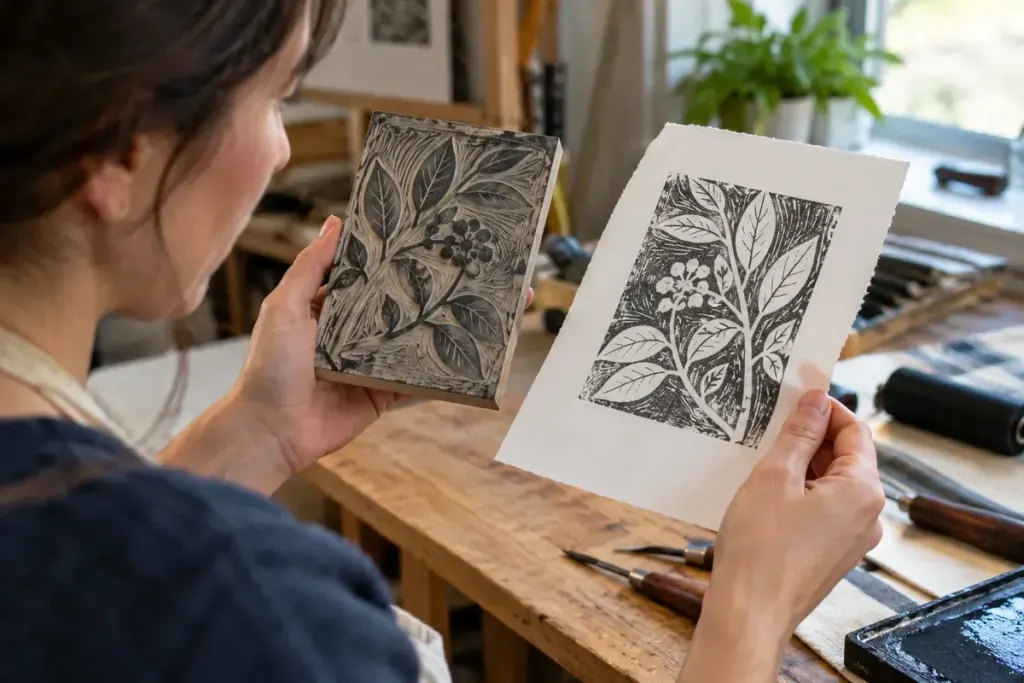
Your carved letter looks correct on the block, yet the print reads backwards. Relief printing reverses the image when the inked surface meets the paper. A design that includes lettering needs that reversal planned before carving begins.
Start with a small paper test. Draw the intended finished image, including a distinctive letter or an arrow, and make a mirrored working copy for the block. A digital flip or a suitable transfer method can help, but check which stage of your process already reverses the design.
Follow the image through every transfer
Label the paper mock-up as the intended print and the working version as the block view. Without those labels, it is easy to reverse a drawing twice and arrive back at the original mistake.
For an imaginary stamp reading “UP”, draw how you want the paper result to look. Then inspect its mirror image as the carving guide. The example is deliberately short: one recognisable word makes orientation errors easier to see than a complicated decorative border.
Also decide which areas should receive ink. In a basic relief process, raised areas print while removed areas generally do not. Reversing the letters and confusing the positive and negative spaces are separate problems.
Make a proof before finishing every detail
Use materials and tools appropriate to the block, following their safety instructions. Secure the work and keep hands out of the cutting path. A paper orientation test does not require taking a cutting risk.
When the block is ready for a trial impression, make a proof on spare paper. Check the direction, spacing and small spaces inside letters before committing to the final cards or edition.
Keep that proof beside the block as you refine it. Material removed by mistake cannot simply be restored by pressing harder with ink. A clear distinction between the block view and the finished view saves effort and makes the reversal part of your design process rather than a surprise at the end.