
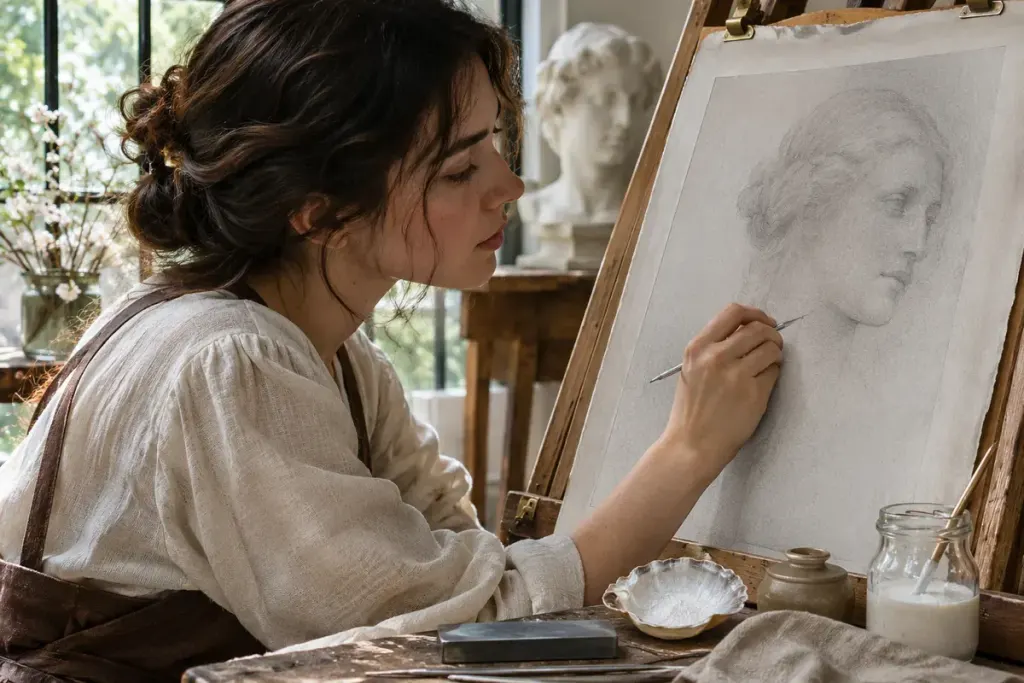
A silver wire can make a delicate drawing, but it does not behave like a graphite pencil on ordinary paper. The surface does part of the work: a suitable prepared ground takes tiny traces of metal from the point.
The National Gallery of Art’s metalpoint resource explains the relationship between the metal and the prepared support. It also places silverpoint within a much longer drawing tradition. Understanding that relationship makes the first experiment far less puzzling.
Start with a sample rather than a finished drawing
Use a commercially prepared silverpoint surface or follow the ground manufacturer’s instructions. On a small area, draw several light parallel lines. Change spacing before changing pressure. Closely placed marks can build a darker-looking passage without repeatedly digging into the same groove.
Keep another section for a gradual curve, a short hatch and a broader shaded patch. Label a separate note with the ground, metal and date. This gives you a record of the combination instead of attributing every result to the tool alone.
A point that barely marks unsuitable paper is not necessarily defective. Pressing harder may damage the support without producing the effect you wanted. Try the intended surface before replacing the holder or reshaping the point.
Let the material set the pace
Silverpoint marks can change appearance as the silver oxidises over time. That is part of the medium’s character, not a reliable timetable for obtaining a particular colour. The ground and storage conditions also influence what you see.
Corrections depend on the support and preparation, so test any method on a spare piece first. For an initial subject, choose something with a clear contour, such as a folded cloth or simple vessel. Leave room between early marks and develop the tone patiently; the technique rewards deliberate observation more than force.