
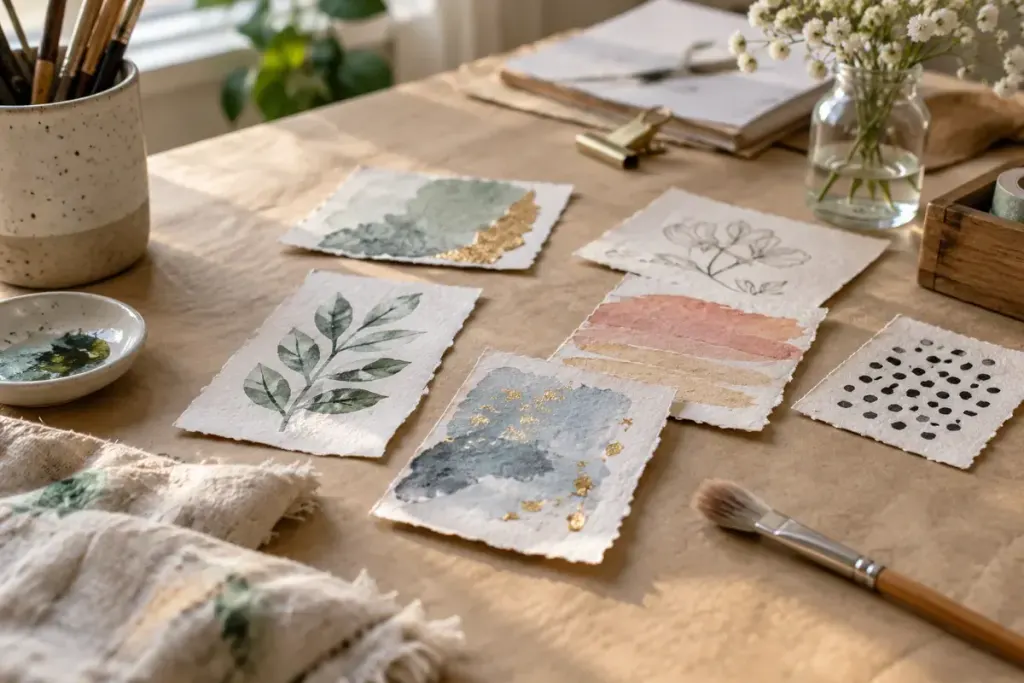
The collage looks finished until the first brushstroke of sealer drags a dark line across a pale area. A product described as clear can still change the appearance of paper, ink or paint. Test the combination, not just the bottle.
A useful test sample contains the same layers as the project: base material, adhesive, paper, printed or drawn marks, and proposed finish. An unrelated scrap of plain card cannot tell you how your actual ink will behave.
Build a small rehearsal
Keep an offcut when you start the project. Add a little of every material that matters, including a dark mark beside a pale area and an exposed paper edge. Let the underlying layers dry according to their instructions before testing the finish.
Follow the finishing product’s label for compatible materials, ventilation, application and curing. A water-based craft coating, an aerosol and a resin system are not interchangeable procedures. Do not add a second product simply because someone used that combination on a different paper.
Divide the sample into two areas and leave one untreated. Apply the planned finish to the other with the same tool and number of coats you intend to use on the project.
Inspect it twice
- During application, watch for colour moving into the brush or across the surface.
- After the stated drying or curing period, compare colour depth and sheen with the untreated section.
- Check whether the paper curls, edges lift, the surface stays tacky or layers separate.
- View the sample where the finished object will sit, rather than only under the work lamp.
Label the back with the material names, date and application method. If you alter a variable, make a new labelled sample. Changing the paper, ink and finish at once may produce a better result, but it will not tell you which change mattered.
Some objects do not need a coating at all. A protected display or suitable frame may preserve the surface you prefer. If the test changes the work in a way you dislike, stopping is a successful result: the sample has done its job before the finished piece paid the price.