
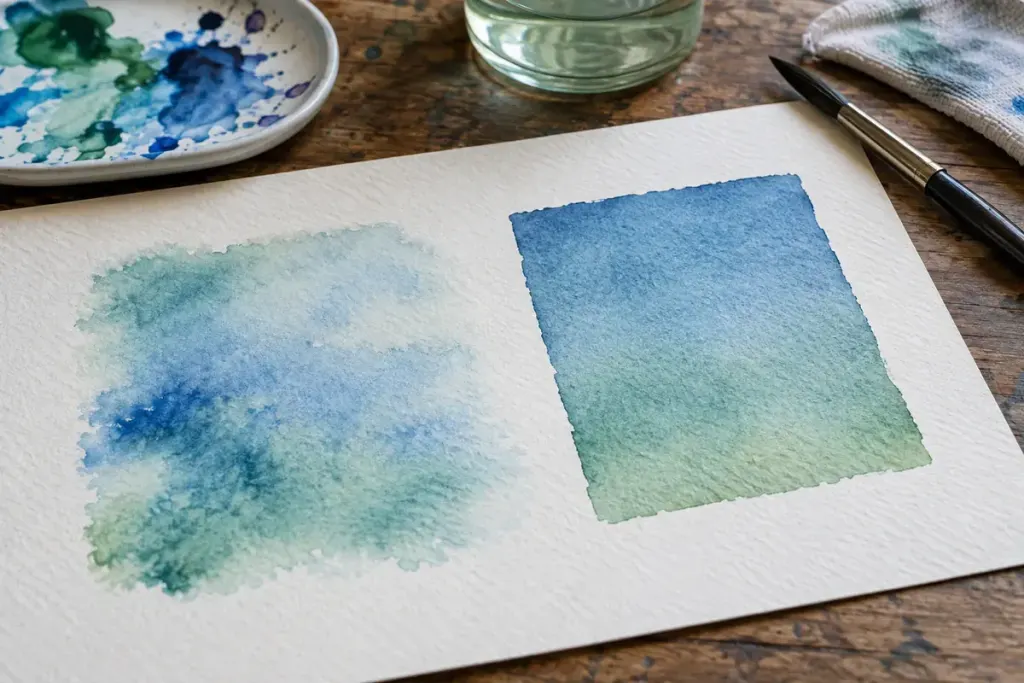
Paint the same blue line twice and it can tell two different stories. On dry paper it may hold a clear boundary. On a damp surface it can spread into a softer shape. Before trying to control a whole landscape, give those two conditions a small page of their own.
One colour, two patches
Use watercolour paper, one brush and a single diluted colour. Divide the sheet lightly into two areas. Leave one dry. Brush clean water over the other until it is evenly damp, without a puddle running across it.
Apply a similar stroke to each area. Watch rather than immediately correcting. On the damp side, note how far the pigment travels and whether it gathers near an edge. On the dry side, look at the outline and the marks left by the brush.
Winsor & Newton’s watercolour demonstration uses a wetted area to let colour disperse. The useful lesson for this exercise is the relationship between the surface moisture and the movement of paint, rather than copying the finished composition.
Repeat after the shine disappears
Make a third patch and wait until its wet shine has faded before adding colour. The result may fall between the first two. Paper, pigment, brush load and room conditions all affect the timing, so “wait one minute” is less informative than observing the surface.
Write a short note beside each dry sample: wet and shiny, damp without shine, or dry. Include whether the brush was heavily loaded. A page of remembered conditions becomes more useful than three attractive but unexplained swatches.
Try a soft edge for an area you want to recede and a crisp edge where a shape needs definition. Neither technique is the correct choice for every subject. Stop before repeated brushing damages the paper, let the tests dry, and decide which edge serves the picture you want to make.