
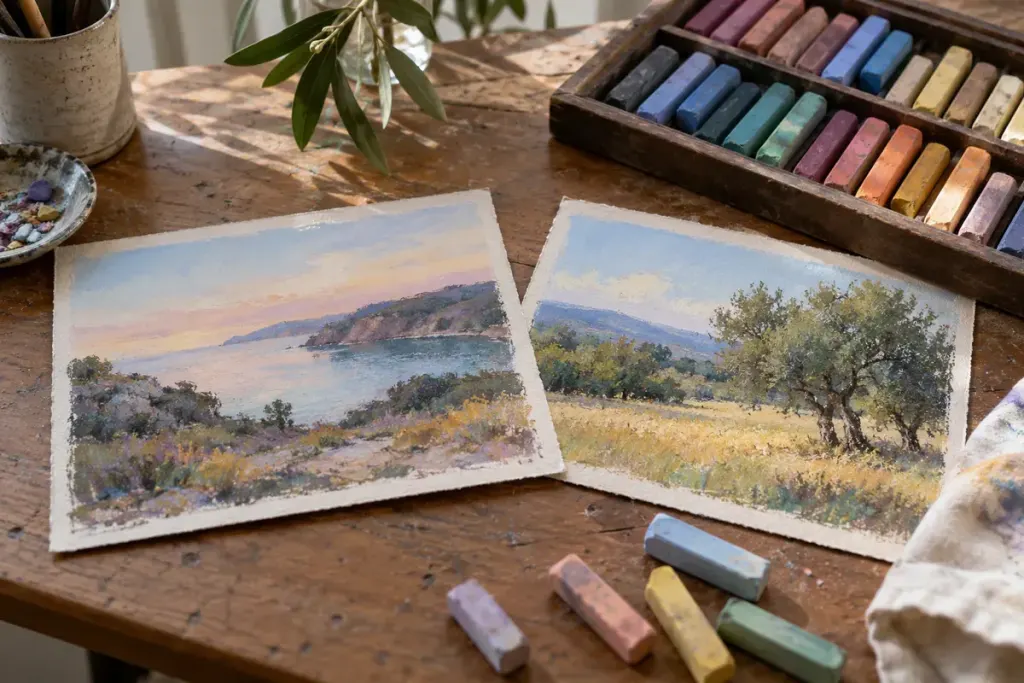
A soft-pastel drawing can look luminous precisely because loose pigment catches the light at the paper’s surface. Spraying a fixative changes that surface. Before protecting a finished piece, find out whether you like the change on a spare sample.
Royal Talens’ soft-pastel guidance explains that fixing can alter the characteristic appearance and that excessive application can darken colours without making the work completely smudge-proof. Its pastel-fixative information also identifies the product as extremely flammable. Read the specific product label and safety instructions before use.
Make a sample worth comparing
Use the same paper and pastel sticks as the artwork. Include a pale passage, a dark passage and an area with several layers. Leave one part untreated so you can compare it with the fixed area after the specified drying time.
Photograph the sample under consistent lighting if you want a record, but also inspect the real surface. A phone may adjust exposure between photographs and conceal the very change you are trying to judge. Note the product, application method and number of light applications rather than recording only “sprayed.”
Apply products only in the conditions their safety instructions require, away from ignition sources. Do not substitute hairspray or another household aerosol because its can looks similar. A material intended to hold a hairstyle is not an archival treatment for a drawing.
Protection also includes handling and framing
Decide how the drawing will travel and be displayed. Fixative does not remove the need to protect a delicate surface from rubbing. Ask a framer familiar with pastels about spacing the artwork away from glazing and supporting it appropriately.
The test may lead you to use less fixative, use a different compatible product, or leave the final layer unfixed. A successful trial answers a question about your materials; it does not establish a rule that every pastel drawing must be treated in the same way.