
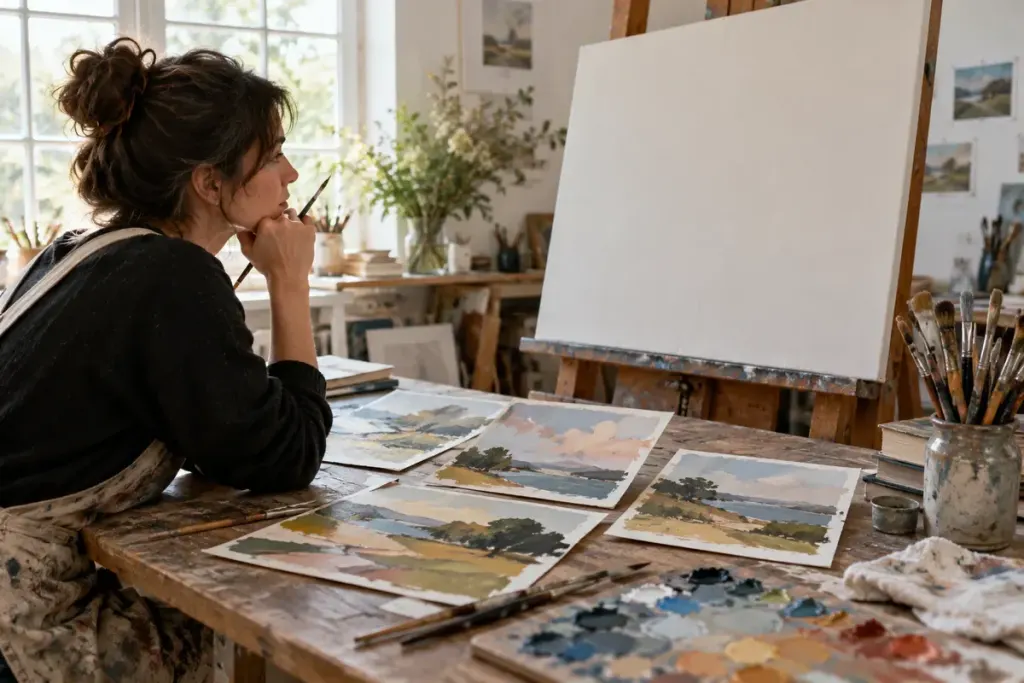
A painting can look convincing in a pencil sketch and still become confused when colour arrives. Before committing to a large canvas, try a small colour study: a simplified version that tests the main relationships without asking every detail to be finished.
Use the same proportions as the planned painting. Mark the largest shapes first, leaving tiny objects and intricate edges aside. The study should answer a few decisions about the whole image, not become a miniature commission competing with the main work.
Give each study one question
You might ask whether a warm background makes the subject feel closer, whether the darkest shape sits in the right place, or whether two bright colours compete for attention. Make a second version with one meaningful change so the comparison remains understandable.
For an illustrative still life, keep the arrangement of a blue jug, pale cloth and orange fruit the same in both studies. Change the background from a muted green to a warm grey. Now compare where your eye lands first. Changing every colour at once would make it harder to identify what helped.
Step back from the studies. A design that only works when inspected from a few centimetres away may not carry across the room. A quick greyscale photograph can also help you examine light and dark relationships separately from the attraction of a favourite hue.
Keep a usable record
Write the main paint mixtures beside the version you choose. If a mixture uses several pigments, note approximate proportions rather than relying on memory. Let the study dry before making a final judgement, especially if the medium changes appearance as it dries.
The larger painting will still require decisions about edges, texture and scale. Keep the study nearby as a reference, but allow a deliberate change when the bigger surface reveals a problem. Its value is that the major colour choices have already been explored on a small, inexpensive piece of work.