
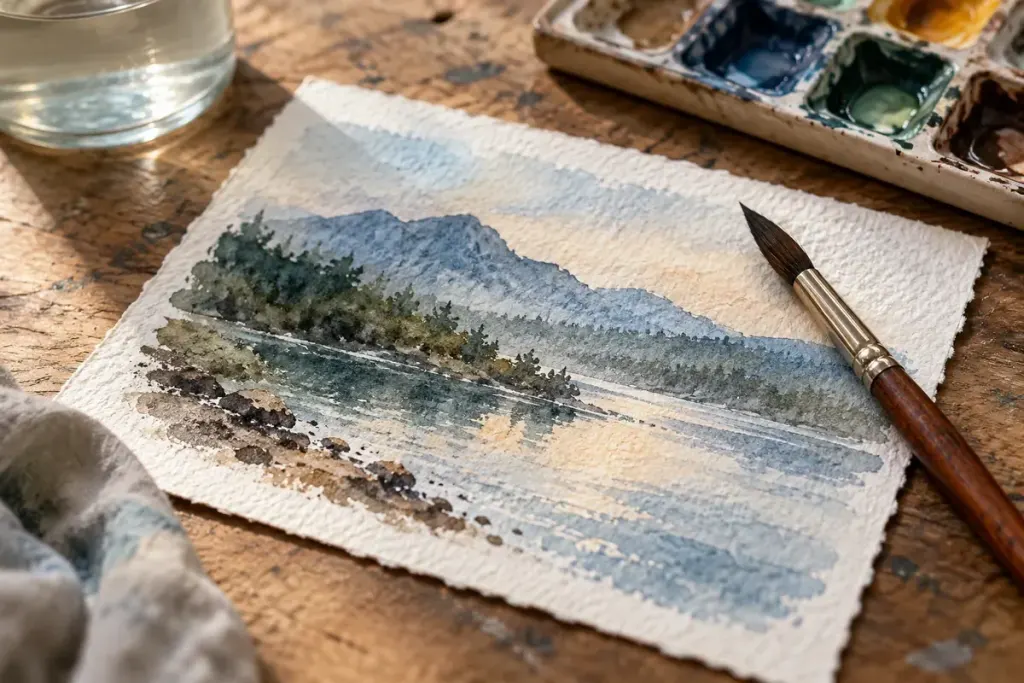
A blue wash dries with tiny darker deposits in the hollows of the paper. Before reaching for a clean brush to smooth it out, check the paint. You may be looking at granulation, an effect that artists deliberately use for stone, weathered walls and broken colour in landscapes.
Winsor & Newton explains granulation as pigment settling unevenly, with the texture of the paper helping the effect become visible. Different pigments behave differently. A tube’s colour name alone does not tell you exactly what a particular manufacturer’s mixture will do.
Make a swatch you can learn from
Use a spare piece of the paper intended for your painting. Mix enough paint for two small neighbouring washes. Paint the first with a few even passes, then leave it undisturbed. Work the second a little longer. Let both dry fully before comparing them.
This is a practice exercise, not a scientific measurement. Its value comes from keeping the paint and paper the same while changing your brush handling. Note which area retains a pleasing grain and which looks rubbed, streaked or uneven for another reason.
If you also want to compare papers, make a fresh pair of swatches. Do not change the paper, paint mixture and brushing all at once and then attribute the difference entirely to texture.
Decide where the texture belongs
A granulating wash can give a simple rock shape considerable character. The same visual activity may compete with a small, carefully painted face. Try placing a textured passage beside a quieter one so that both have a purpose in the composition.
Keep granulation separate from staining in your notes. The first describes the pigment’s visible distribution; staining concerns how strongly colour remains in the paper. The manufacturer’s terminology guide distinguishes these properties. Neither label guarantees that a dried mark will lift cleanly.
Write the pigment or product code on your swatch after it dries. A small collection of observed examples becomes a much better guide than expecting every blue or every earth colour to behave alike.