
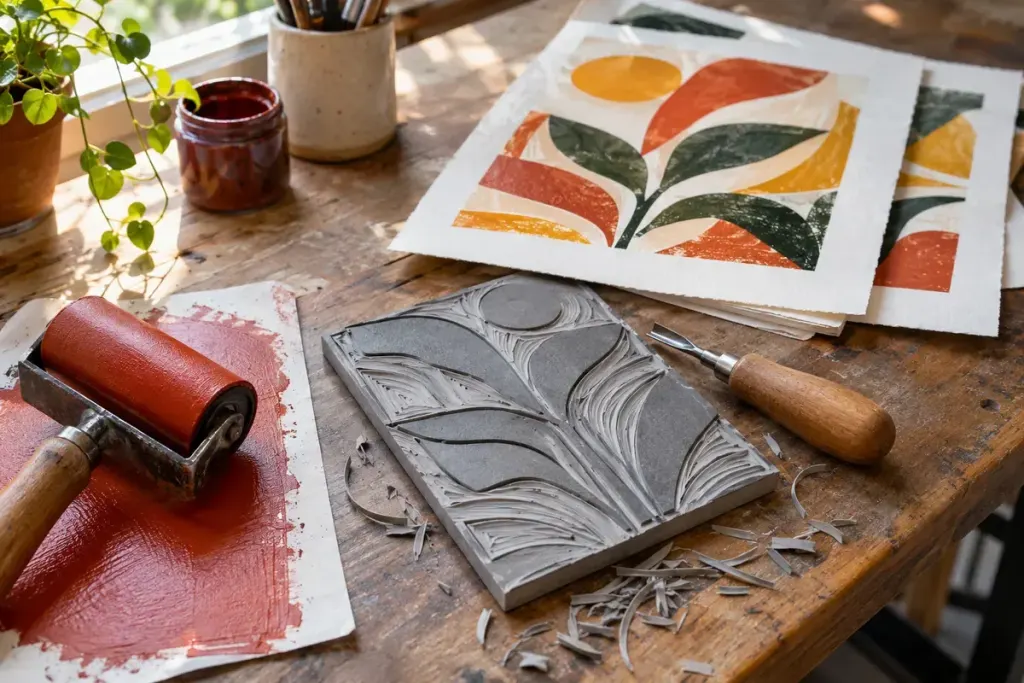
A reduction linocut carries its history in the print, while the block gradually loses the ability to repeat that history. The artist prints a colour, removes more material, prints again, and continues. Each new cut changes what remains available to take ink.
The Remai Modern Picasso collection describes this successive carving and printing process. The Norton Simon Museum’s record of Still Life with a Glass under the Lamp offers a concrete example of several colours made from one progressively cut block.
Think in preserved areas
Try planning a simple imaginary print of a yellow cup with a dark handle on white paper. Areas removed before the first colour stay paper-white. After printing yellow, carve away the parts that should retain yellow. The remaining raised surface can then print the darker shapes.
This is a planning exercise rather than a complete colour recipe: transparent inks, overlaps and the order of layers can change the result. Sketch the stages on paper first. Label which areas must disappear from the block after each impression instead of relying on memory at the cutting bench.
Decide the edition before the next cut
Print every sheet that needs the current stage before carving further. Include a few clearly marked working sheets for testing later layers. If you discover that an earlier impression is missing after its surface has been removed, the block can no longer reproduce it in the same way.
Number the working sequence on the backs of sheets in pencil and keep them organised while they dry. Record the ink mixture for each stage. That notebook is useful even when a colour behaves differently from the sketch, because it shows where the change occurred.
A small two-colour design is a sensible first experiment. The challenge is not the number of cuts but deciding which information must survive each stage. Give the carving tool a secure working position and keep hands out of its path. When you pause before an irreversible cut, compare the block with both the plan and the last printed sheet.