
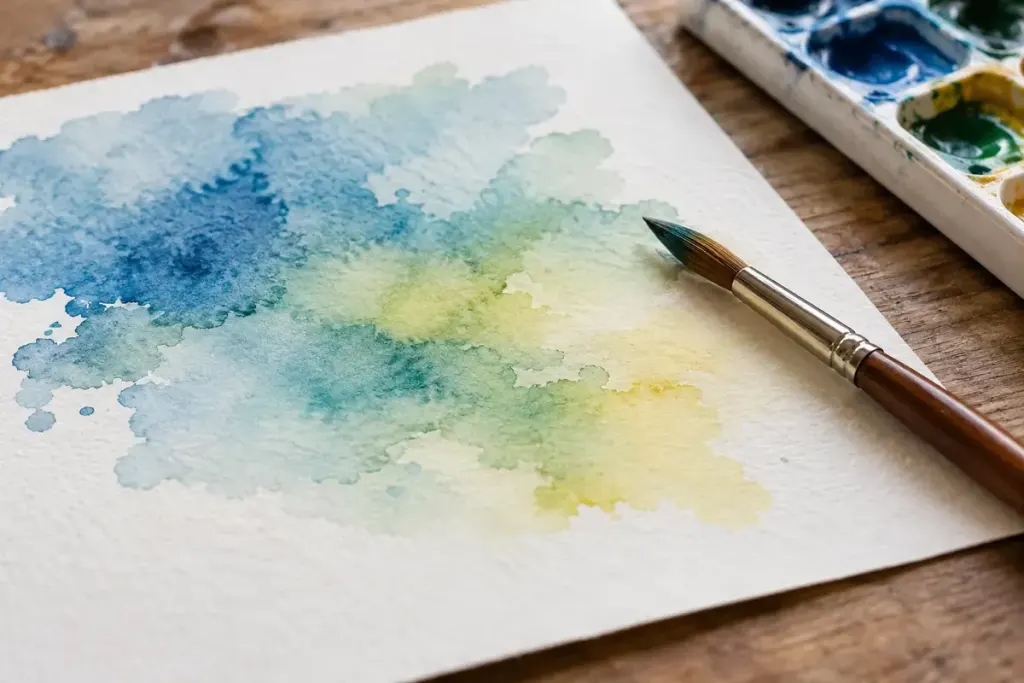
A fine point looks promising in the shop, but the rest of the brush helps determine how it paints. On a round watercolour brush, the fuller section behind the tip can hold water and colour. A brush with a useful point and a generous body may cover more ground than its narrow tip suggests.
Make three marks before choosing a favourite
Use a practice sheet of your usual paper. Load the brush with a modest wash and draw a light line using the tip. Then increase pressure gently to make a broader stroke, and finally try a small filled shape. Keep the pressure comfortable; crushing the hairs against the paper is not a fair test.
Notice when the stroke runs dry, whether the point returns and how much control you have at the edge. Repeat after rinsing with another brush. Keep the paint mixture and paper similar so the comparison says something about the tools rather than three changing conditions.
For an original exercise, draw five leaf shapes using only changes of pressure. A tiny brush may require several reloads to fill each shape, while a larger pointed brush may complete it in one movement. Neither result establishes a universal winner; it reveals which movement feels manageable to you.
Numbers do not replace a sample
Brush sizes are not a dependable like-for-like comparison across every range. Look at the actual hair length, width and shape. Synthetic and natural-hair ranges can also feel different, even when their labels use similar language.
Ask whether a retailer offers a demonstration or sample before making a costly choice. Avoid testing merchandise with water without permission. If buying online, compare dimensions and photographs with a brush you already own.
Protect the working shape
Rinse and reshape the brush according to its maker’s instructions. Do not leave it standing on its point in a water jar. Store it so the hairs are not bent beneath other tools.
A useful brush is one that delivers a controllable mark for your painting. The point starts the conversation; the belly, spring and feel in your hand finish it.